Website Speed Optimisation Guide
In the modern digital ecosystem, an aesthetically pleasing website is simply not enough. Your website could feature the most cutting-edge design, compelling copy, and high-quality products, but if it takes more than three seconds to load, over half of your potential visitors will abandon it before ever seeing the first pixel. As the best Freelance Web Developer in Malappuram, Sinan MC Malappuram, I constantly emphasize to my clients that website speed is the foundational pillar of both user experience and Search Engine Optimization (SEO). This comprehensive website speed optimization guide will explore the profound impact of load times on your Google rankings, dissect the technical nuances of Core Web Vitals, and provide actionable strategies to transform your sluggish site into a lightning-fast conversions machine.
Why speed affects SEO
Google's ultimate mission is to provide its users with the most relevant, high-quality information as quickly and seamlessly as possible. Therefore, it is no surprise that website speed has been an explicit ranking factor in Google's algorithm for over a decade. A slow website acts in direct opposition to Google's user-centric philosophy. When a user clicks a search result and experiences a frustrating delay, they frequently hit the 'back' button—an action known as 'pogo-sticking'. This immediate bounce sends a powerful negative signal to Google, indicating that your webpage did not satisfy the user's intent or provide a high-quality experience.
Beyond direct algorithmic penalties, speed fundamentally alters user behavior metrics, which indirectly impacts SEO. Faster websites report significantly higher average session durations, lower bounce rates, and massively increased conversion rates. Studies consistently show that a mere one-second delay in page load time can result in a 7% reduction in conversions and a 16% decrease in customer satisfaction. In hyper-competitive markets, this fractional difference can represent thousands of dollars in lost revenue.
Furthermore, speed dictates the efficiency of search engine crawlers. Googlebot has a allocated "crawl budget" for every domain—the number of pages it will crawl within a specific timeframe. If your server is slow to respond, Googlebot will crawl fewer pages, meaning your new or updated content will take drastically longer to be indexed and appear in search results. Optimizing speed effectively expands your crawl budget, ensuring rapid indexation of your entire digital footprint.
Core Web Vitals explained
To standardize the measurement of user experience, Google introduced Core Web Vitals—a trio of highly specific, user-centric performance metrics. These vitals have become a critical component of Google's Page Experience ranking signal. Understanding and optimizing these three distinct pillars is non-negotiable for modern SEO success.
Largest Contentful Paint (LCP): This metric measures loading performance. Specifically, it records the precise moment when the largest text block or image element becomes fully visible in the user's viewport. To provide a good user experience, your LCP should occur within 2.5 seconds of the page starting to load. A poor LCP is often caused by slow server response times, render-blocking JavaScript and CSS, or unoptimized hero images prominently featured at the top of the page.
First Input Delay (FID) / Interaction to Next Paint (INP): While FID measures interactivity (how long it takes for the browser to respond to the user's first interaction, like clicking a button), Google is rapidly transitioning to Interaction to Next Paint (INP) as a more comprehensive metric. INP measures the overall responsiveness of the page throughout its entire lifespan, not just the first click. A good INP score is under 200 milliseconds. Heavy JavaScript execution is typically the primary culprit behind poor interactivity scores.
Cumulative Layout Shift (CLS): CLS measures visual stability. Have you ever tried to click a button, only for a delayed image to load, shifting the entire page layout and causing you to click the wrong link? That frustrating experience is exactly what CLS quantifies. To provide a high-quality experience, pages should maintain a CLS of strictly less than 0.1. Preventing layout shifts requires explicitly defining dimensions attributes for all images, ads, and iframes, and strictly avoiding injecting dynamic content above existing content.
Image optimisation
Unoptimized visual assets are statistically the most common cause of bloated, slow-loading web pages. High-resolution images, while stunning, carry massive file sizes that absolutely cripple loading speeds across mobile connections. Mastering image optimization involves a multifaceted technical approach to drastically reduce file sizes without compromising visual fidelity.
The first step is format modernization. Legacy formats like JPEG and PNG are rapidly becoming obsolete for web delivery. Modern, next-generation formats like WebP and AVIF offer vastly superior compression algorithms, routinely reducing image file sizes by 30% to 50% without any perceptible loss in visual quality. Converting your entire media library to WebP is one of the most immediate and profound speed improvements you can implement.
Secondly, implement progressive native lazy loading. Lazy loading defers the downloading of off-screen images until the user naturally scrolls down the page and the images are actually needed. This technique dramatically reduces the initial payload required to render the crucial above-the-fold content, massively improving both perceived load times and LCP scores.
Finally, ensure proper responsive sizing. Serving a massive 3000-pixel wide desktop image to a 400-pixel wide mobile screen is a colossal waste of bandwidth. You must utilize responsive image attributes (such as the HTML `srcset` attribute) to serve mathematically scaled image files that perfectly match the user's specific device resolution.
Code optimisation
Behind the visual interface of your website lies the architectural code—HTML, CSS, and JavaScript. The efficiency, structure, and delivery of this code dictate how rapidly the browser can paint the UI onto the screen. Code bloat is a silent performance killer.
Minification is the mandatory process of stripping all unnecessary characters—such as whitespace, comments, and line breaks—from your source code files. While these elements improve human readability for developers, they are entirely useless to the browser and only serve to inflate file sizes. Compressing these minified files using robust server-side algorithms like Gzip or the highly efficient Brotli algorithm further minimizes network transfer times.
Render-blocking resources present a major hurdle to fast loading. When a browser encounters a synchronous JavaScript or CSS file in the document head, it must entirely pause HTML parsing until that file is completely downloaded, parsed, and executed. To optimize this, critical CSS required for rendering above-the-fold content should be inlined directly into the HTML, while non-critical CSS and JavaScript should be deferred or loaded asynchronously.
Modern web development utilizing advanced frameworks like Next.js natively handles much of this code splitting and optimization, ensuring that users only download the specific JavaScript required for the exact page they are viewing, rather than the entire application bundle. If you need assistance modernizing your codebase, consider my professional web development services.
Hosting importance
You can ruthlessly optimize every single image and meticulously minify every line of code, but if your website is hosted on a cheap, overcrowded shared server, it will never achieve peak performance. Your web hosting provider is the foundational engine of your website's speed infrastructure. Time to First Byte (TTFB)—the time it takes for your server to respond to the browser's initial request—is entirely dictated by your hosting configuration.
Shared hosting environments operate by cramming thousands of different websites onto a single server, forcing them to aggressively compete for limited CPU, RAM, and bandwidth resources. If a neighboring website experiences a massive traffic spike, your website will inexplicably slow down. Transitioning to robust hosting solutions—such as Virtual Private Servers (VPS), dedicated servers, or highly scalable Managed Cloud Hosting (like AWS, Vercel, or DigitalOcean)—provides dedicated, isolated resources that guarantee rapid, consistent response times.
Furthermore, deploying a global Content Delivery Network (CDN) is essential for international or geographically dispersed audiences. A CDN caches static versions of your website's assets across a massive network of global servers. When a user in London accesses your site, the assets are delivered from the London server rather than traversing the globe from your origin server in India, drastically reducing network latency.
Tools to measure speed
Effective optimization is impossible without accurate, continuous measurement. The web performance ecosystem offers several powerful, industry-leading tools to diagnose bottlenecks and track improvements.
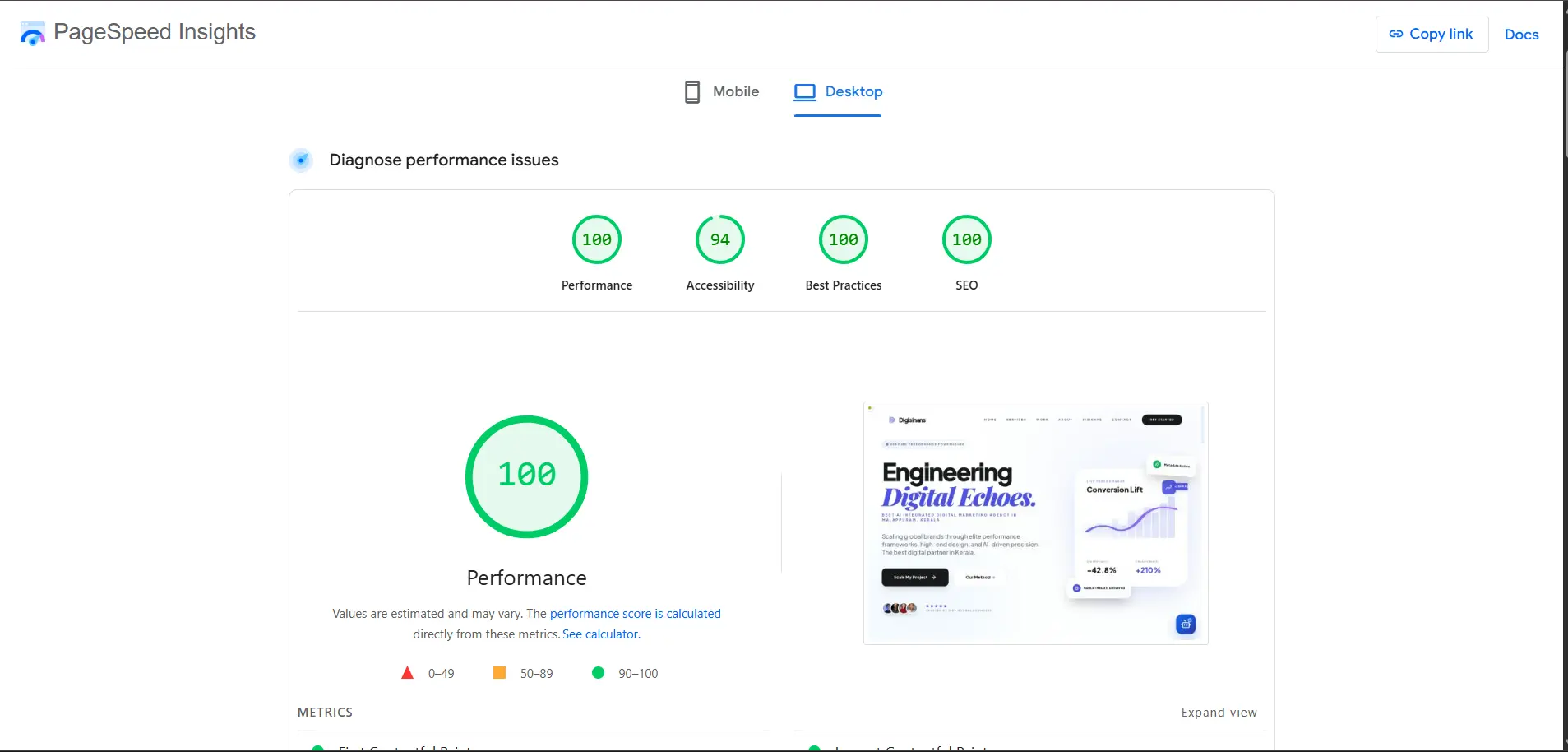
Google PageSpeed Insights: This is the definitive tool. It provides a comprehensive analysis of both mobile and desktop performance, explicitly calculating your Core Web Vitals using actual field data from real Chrome users alongside simulated lab data. It generates highly specific, actionable recommendations straight from Google.
GTmetrix: A favorite among developers, GTmetrix provides a deep, highly visual waterfall chart that chronologically details exactly how every single asset on your page loads. It is invaluable for identifying specific oversized images, slow third-party scripts, or render-blocking CSS files.
Chrome Developer Tools: Built directly into the Chrome browser, the "Network" and "Lighthouse" tabs allow developers to simulate various network connection speeds (like sluggish 3G), analyze precise loading metrics, and track down complex JavaScript execution bottlenecks in real-time.
Conclusion
Website speed optimization is not a singular, one-time task; it is an ongoing process of technical refinement. In 2026, Google's algorithms ruthlessly prioritize user experience, making rapid page loads a non-negotiable requirement for commanding top search engine rankings. By mastering your Core Web Vitals, implementing aggressive image and code optimization, and investing in enterprise-grade hosting architecture, you can secure entirely disproportionate competitive advantages in your market.
Don't let a slow website throttle your business growth and hemorrhage organic leads. If you are serious about dominating local search and delivering a world-class digital experience to your customers, partner with the expert. Reach out to Sinan MC Malappuram, and let's engineer a lightning-fast, high-converting digital platform that scales your business instantly.